

2·
15 days agoI will check this on my Lenovo Legion go s once I am home
I will check this on my Lenovo Legion go s once I am home
Maybe my argument was oversimplifying. What I wanted to say is that Nextcloud alone does not provide a platform to fulfill the needs of a school (Teachers, kids and parents included) but it requires a lot more.
Using Nextcloud as a starting point is imho the wrong approach. Nextcloud should be used as a part of a bigger solution that actually tries to create/provide a solution for schools. Nextcloud should be tightly integrated into that overall solution.
And you are absolutely right: it solves the problem of sharing **homework material **. Bit this is its job: sharing files. Nothing more.

That was very interesting to read. Thanks for sharing!
Having Nextcloud does not fulfill the actual needs of a school:
Nextcloud is for filesharing. But filesharing is not a priority need for a school. Yes, you can try to solve this via plugins and stuff. Bit this is just trying to bend something into shape that is not meant for the job.
Better to use a different platform actually tailored to the use case. For example edupage. But edupage has lots to improve (e.g. using in in the browser on mobile is horrible and the UI is very cluttered).
So I don’t see how this actually benefits a school.
Waiting for this to be available on steamOS
I have one of these on my backup Server. But about 2 out of 5 times the HDMI signal is not detected (after the Backup Server was running for a couple days) and I need to restart the Backupserver to get it working. restarting the JetKVM does not work. In comparison I had none of these issues with a NanoKVM. I don’t know if it is a problem of the JetKVM or the Backup machine.
You could use a NanoKVM together with tailscale: https://wiki.sipeed.com/hardware/en/kvm/NanoKVM/network/tailscale.html
These cost around 60€ (don’t know the dollar price) on Aliexpress (I remember them being a lot cheaper in the past…).
You do not need to use tailscale on the NanoKVM. You could use whatever VPN tooling your router supports to connect to your network and then to the NanoKVM.
P.S. There was fuzz in the past about them including a small microphone that was not documented. Make of that what you want.

Do you compartmentalize the disks again, or do you just make different folders?
Yes, when you are not using BTRFS. Due to OMV using ext4 as default you basically create your Raid and then folders/networkshares on top of it.
ZFS on the other hand allows you to create datasets which are separate ZFS filesystem object that can have its own settings (quota, reservations, permissions, etc.). The “same” goes for BTRFS which supports BTRFS subvolumes.
I do not know how well OMV supports BTRFS and how well it is integrated in the overall workflow. Therefor I cannot give a recommendation if it is feasible to use BTRFS on OMV.
Just checked my UPS. It sits at 105W for:
If you could provide this information on your site (including an explanation about the process on his to set it up) that would be great!
Are there limitations planned in regards to the amount of users for the enterprise plan?
How do you handle things like
I could not find an information about that on your site.
Working in a large corporation and also having worked on SaaS solutions these are important topics. Without even some rudimentary Information about that I wouldn’t even consider your service.
Code hosting is the easy part. Propperer Integration eithwith external systems and separating customer data is the hard part.
I am also using Beszel after using checkmk. For me checkmk was way too complicated (but is also way more powerfull) to setup and maintain propperly. So I switcheed to beszel because it is much easier and good enough for my use case which is:
Besides that I don’t need anything. The only thing missing is SNMP support to check switches, routers and AP’s.
Sometimes nice, sometimes not so much. But in this case: Very nice!
Not globally.
Just for reference:
In the EU the interchange fees are limited to 0.3% for credit cards and 0.2% for debitcards ( REGULATION (EU) 2015/751 OF THE EUROPEAN PARLIAMENT AND OF THE COUNCIL of 29 April 2015 on interchange fees for card-based payment transactions Article 4 and Article 3). But this applies only to private cards. Not Business cards.
About 10x lower compared to the fees mentioned in the linked class action suite. And VISA and Mastercard are still in business in the EU. So it is possible to go much lower.

To not offend anyone: please don’t get me wrong.
It is not the goal of the series to give a historical correct impression. But to create a nice and engaging story. Which is totally fine. But historical accuracy is not part of it.
I watched the first episode and have to say: it is not even close to give a proper impression of the medieval (especially early medieval) ages in europe.
It is a nice show to watch. But a "… pretty good depiction of the market… "? Definetly no.
I do 13th century living history for museums. The show has more in common with a Hollywood movie then anything with history.
Never heard of it.
After reading the article but without digging further into the techncial details of SpruceOS: Did I get it correctly that SpruceOS still is a custom OS that yu need to flash onto your device. But the actual game roms, bios, emulators, etc. and their settings are stored on an SD-Card that you can Plug into any Device with SpruceOS and use it. It will adopt itself to the Hardware available.
Am I correct?
During the medieval period there was no currency used throughout the whole of Germany. Most used the Silver Penny (Pfennig) but there were different types with a different value (amount of silver in them) that also changed over time (some were more stable, some changed every year). People were obligated to exchange old coins for the new ones and part of the exchange was held back by the people in charge (the so called Schlagschatz). Also people coming from a different location were obligated to exchange their coins or silver bars to the local currency at the time. The exchange rates were quite different.
It was a complete mess. But somehow it worked.
I do cooking on living history events for dozens of people. And creating the shopping list from them (where a recipe is absed on another recipe) is always a painpoint. This sounds versy interesting (never heard of it).
I will give it a try. Thanks for sharing!
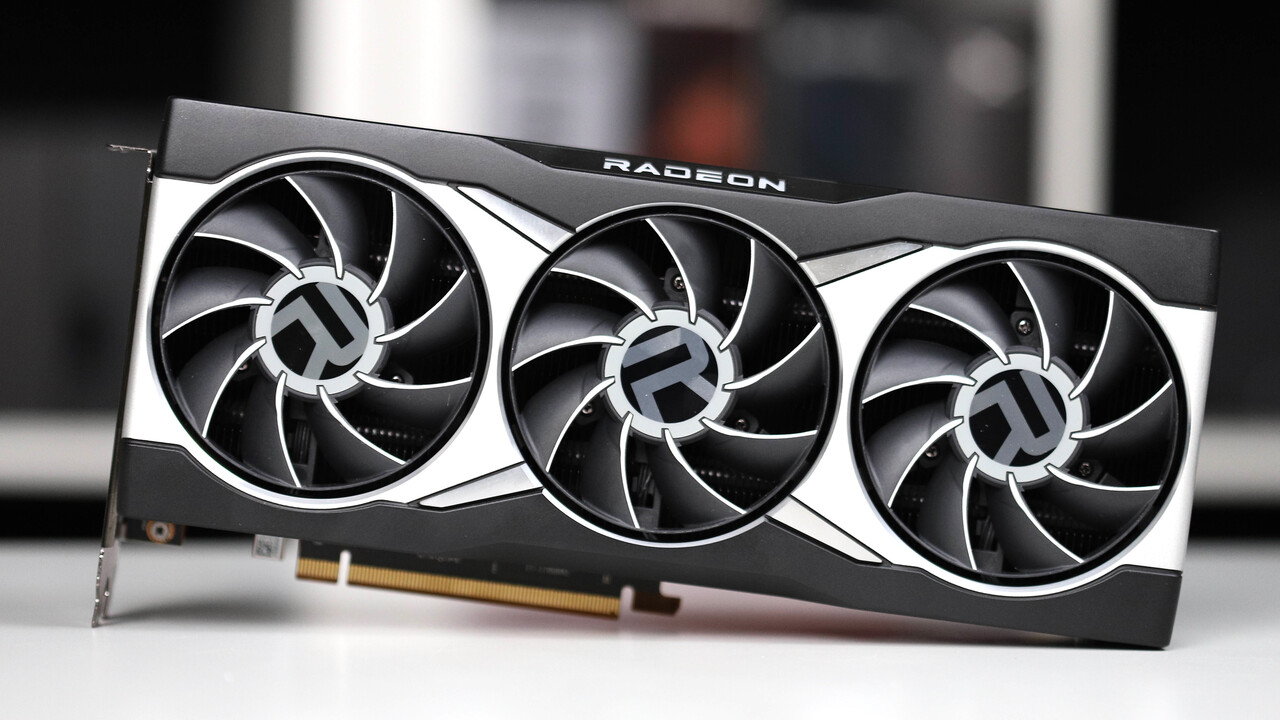
This is really some amazing work! It helped me switch my Sons system from an old 1060 6G to an RX 580 (which I had laying around).
Performance is about the same (sometimes slightly better). But now I do not need to fiddle with this old nvidia GPU driver anymore!



I really hope that the Pixel 12’s will be supported again by GrapheneOS or a cheaper option will be made by Motorola. Otherwise I will have to keep my Pixel 10 with Graphene alive forever (?). I do not expect there to be a real second-hand market for this Device to get your hand on one for cheap.